
Madrid, around 1790. At court receptions, chandeliers glitter, silk rustles, mouths move—and Francisco de Goya hears almost nothing. A sudden illness has left him profoundly deaf. For a painter whose career depends on charming kings and courtiers, it should have been a social death sentence.
Instead, Goya turns the volume down on the world and the contrast up in his art.
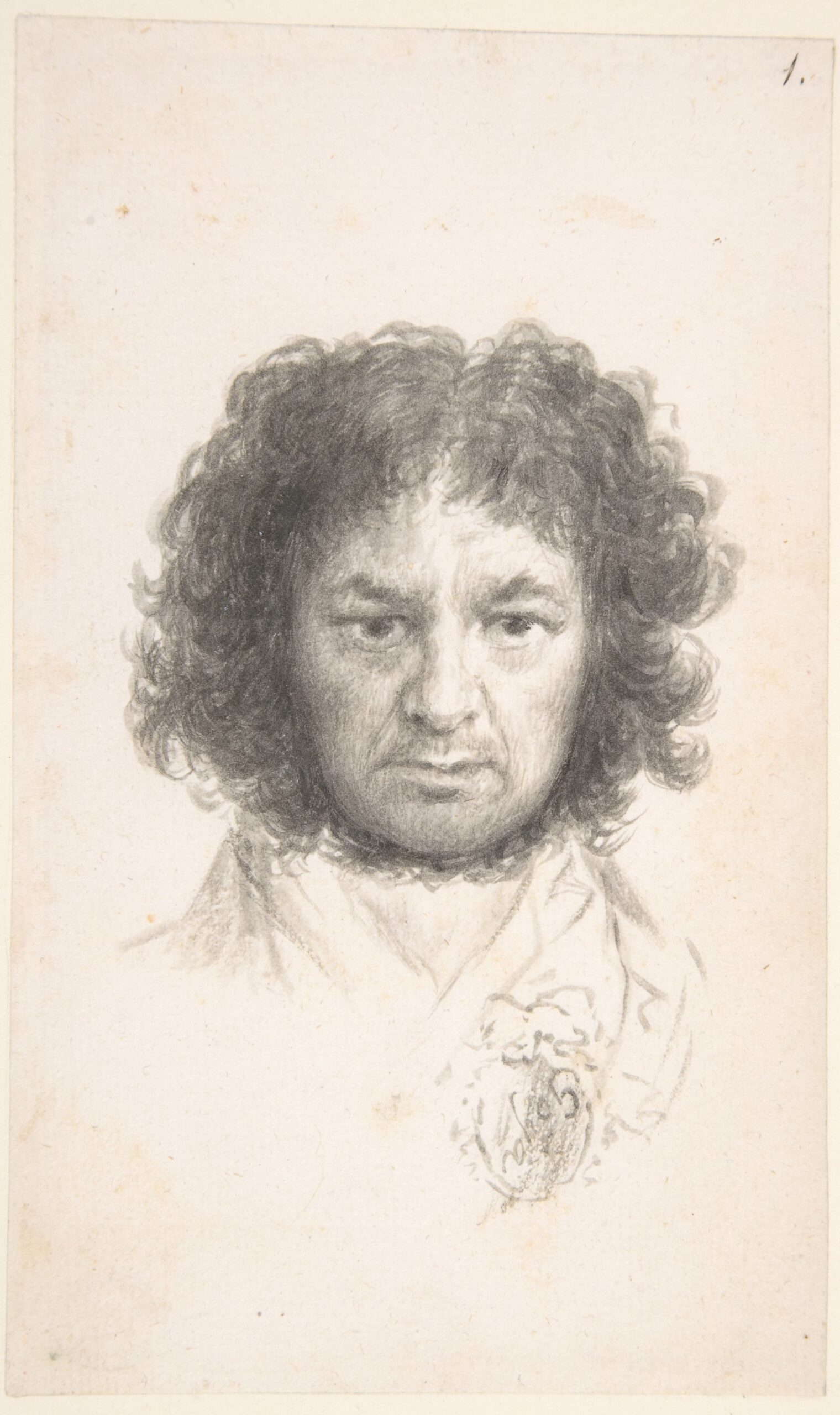
Look at this self-portrait drawing from the mid-1790s. The face leans out of the paper, hat brim cutting a sharp diagonal. His eyes are wide, almost suspicious; the mouth is set, not noble but tired. There is no velvet backdrop, no flattering allegory. Just a man who has been forced to listen inward.
Deafness isolates him, but it also frees him. In the years after his illness, Goya’s work grows stranger and more daring. He etches witches and donkeys in Los Caprichos, records firing squads in The Third of May 1808, and much later will cover his own dining-room walls with the terrifying Black Paintings. You can almost feel the court’s polite chatter replaced by the noise of his own thoughts.
If you’d like to trace how that inner storm reaches the surface, try reading his compositions step by step with How to Read a Painting (in 7 Steps), then dip into the Glossary of Art Techniques for aquatint and etching, and browse more Goya images via our Open‑Access Museums guide. For a darker, later chapter in his story, visit Francisco de Goya’s Black Paintings: When the Walls Start Listening.
Goya’s deafness did not silence him; it merely changed his audience. From courtiers in silk to the one person who cannot look away: you, standing in front of the drawing.