
Some paintings shout; Guernica screams. Picasso’s 1937 mural is a monochrome howl, a stage of broken bodies and blinding light where form itself fractures under the pressure of history. Let’s look closely at how this work turns grief into architecture and light into a siren.
Why black and white?
Guernica’s palette is a storm of greys. Picasso strips away color’s seductions to mimic newsprint and photography—the media through which the bombing reached the world. Black-and-white sharpens moral clarity, and it lets light do the talking: from the blazing bulb above to the fragile oil lamp at left, illumination becomes both witness and accusation.
Composition: a theatre of broken triangles
The mural reads like a collapsed stage set. A pyramidal scaffolding runs from the fallen warrior at the bottom to the electric sun above. Diagonals cut the space into shards—spears of light and rubble. Notice how the open-mouthed horse anchors the center, its ribcage a ladder of pain, while the bull at left stands hulking and unyielding, a dark witness. Doors, windows, and a jagged roofline slice the background into a geometry of catastrophe. Even the floor tiles tilt, as if perspective itself has lost its footing.
Symbols that bruise
– Bull and horse: recurring emblems in Picasso’s visual language. The bull reads like brute endurance or blind force; the horse is raw suffering, pierced and incandescent. Their clash is a drama as old as myth, renewed here as reportage.
– The light bulb (“bombilla”): an electric eye that glares rather than consoles. Overhead like a mechanical sun, it turns the scene into a ruthless operating theatre. Beside it, a human arm lifts a small oil lamp—civil light, intimate light—fighting to be seen under technological glare.
– Mother and child: at left, a column of grief. The mother’s head is thrown back in a silent siren; the infant lies slack, a Pietà without sanctuary. At right, a woman leans from a window, candle in hand, a searching angel who finds only wreckage.
– The fallen warrior: classical fragments on the floor—a shattered statue that still grips a broken sword and a sprig of hope. Even the hand becomes a small altar to endurance.
Technique: speed, scale, and the anatomy of light
Guernica is vast—over 7.7 meters wide—yet breathes with studio immediacy. Picasso drafted the composition in charcoal studies and then worked at mural scale with thin, matte paints, scrubbing, scumbling, and revising. Dora Maar’s photographs record the work’s metamorphoses: the horse’s wound multiplied; the light reshaped; the figures moved like chess pieces until the board itself became catastrophe. Look for scraped passages, stencil-like edges, and areas of raw canvas that let the image hiss with urgency.
Echoes and ancestors
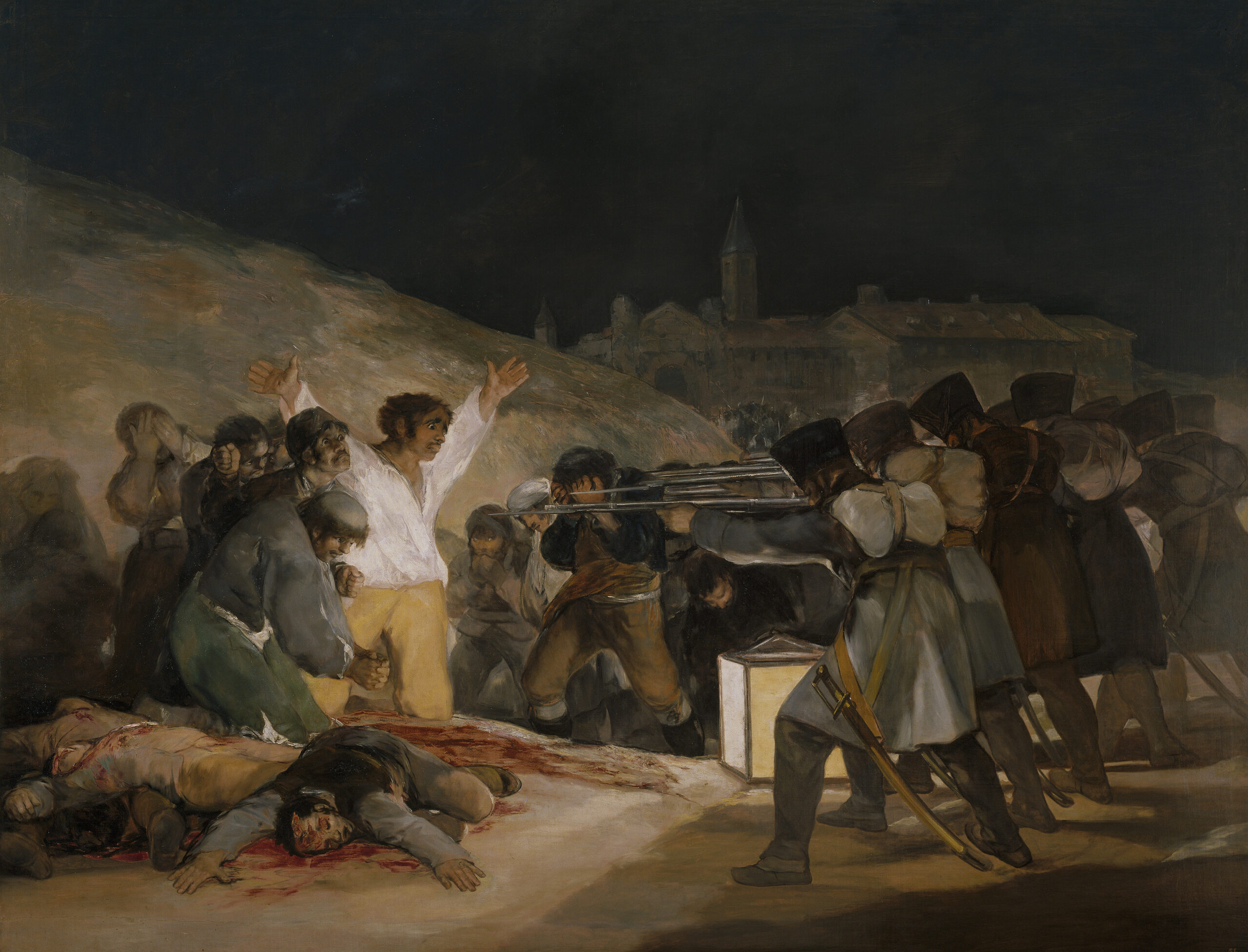
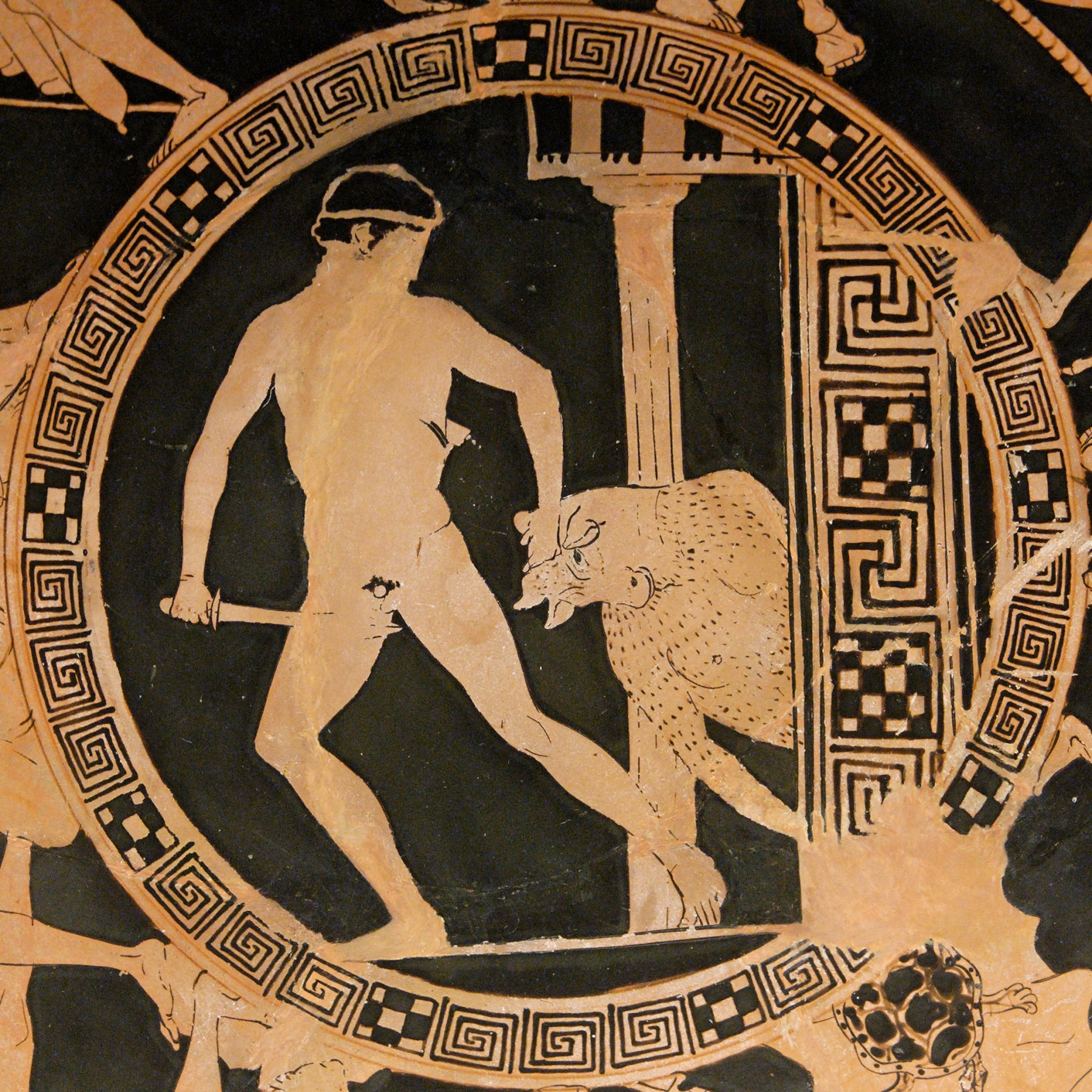
Guernica inherits Goya’s ethical lightning—the way a single beam can expose atrocity—and refracts it through fractured modern space. Its animal combat reaches back to myth too: the Minotaur’s labyrinth, the arena, the charge and the gore reimagined as news.
Context, briefly
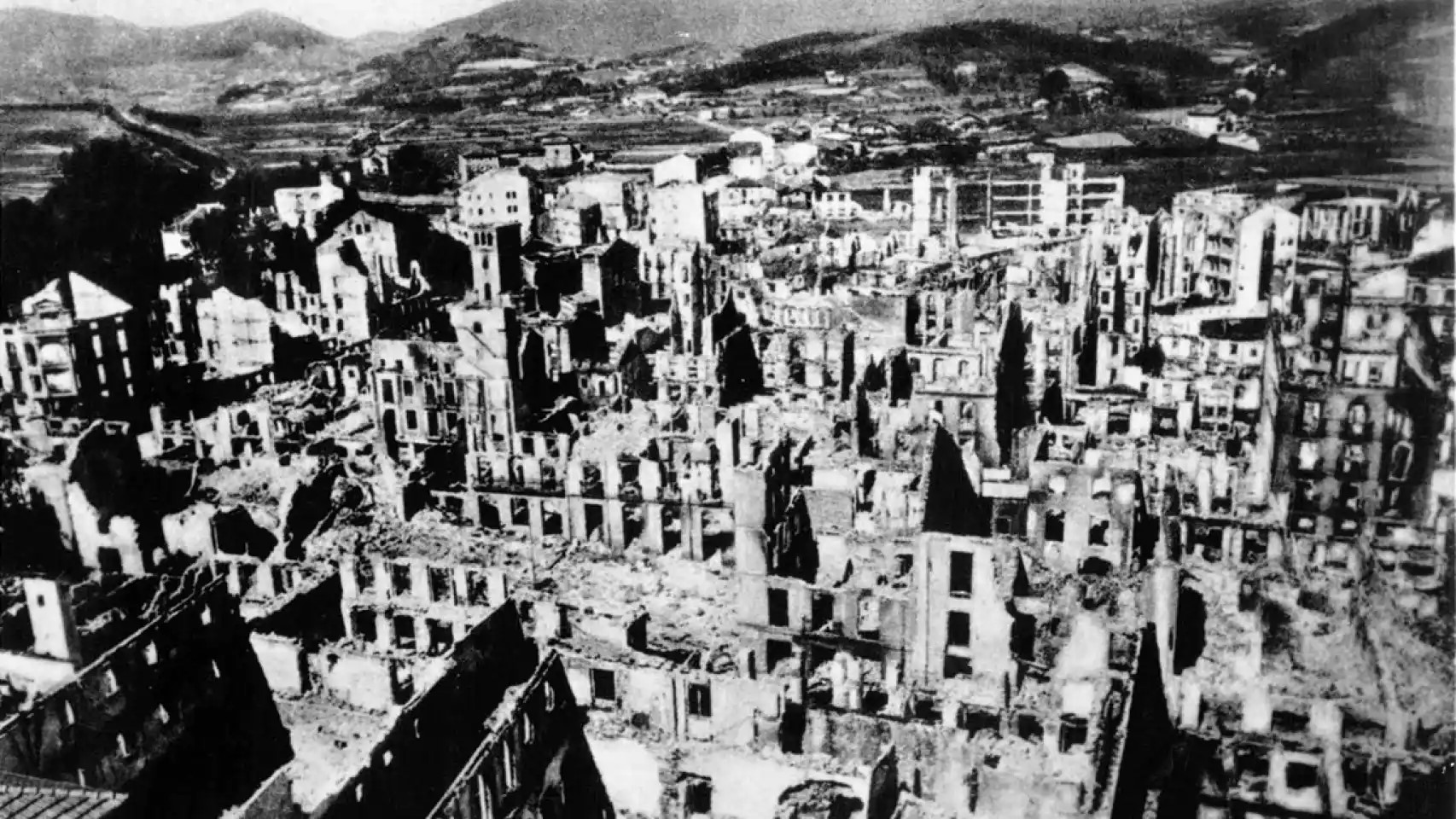
Painted for the Spanish Pavilion at the 1937 Paris Exposition after the Luftwaffe’s bombing of the Basque town of Gernika, the mural was Picasso’s most direct political image. Today, Guernica is on permanent display at the Museo Nacional Centro de Arte Reina Sofía in Madrid (Sabatini Building, Room 206), where the crowd still falls quiet as if entering a courtroom.
Why it still matters
Because it turns war’s noise into legible form. Because its greyscale refuses spectacle. Because its symbols—bull, horse, mother, warrior—are so primal they travel languages and decades. Guernica is not an illustration of one event; it is an operating system for seeing cruelty.
Have a painting you want me to unpack next? Send your wish to hello@artemisia-kunst.com.