
Delft tavern, somewhere around 1670. A jug of beer tips, a dog noses the table, someone is already laughing too loudly. At the edge of it all, a man watches with the alert, amused gaze of someone who knows that life is never more honest than when people forget to behave. This is Jan Steen, Dutch Golden Age painter and part‑time innkeeper, taking mental notes.
For several years, Steen actually ran a pub with his wife’s family. Imagine the material: drunk uncles, flustered maids, children underfoot, spilled wine, bad flirting, late‑night songs. The proverb “a Jan Steen household” is still Dutch shorthand for cheerful chaos. Where other painters glorified tidy domestic virtue, Steen painted what usually happens five minutes after virtue gets bored.
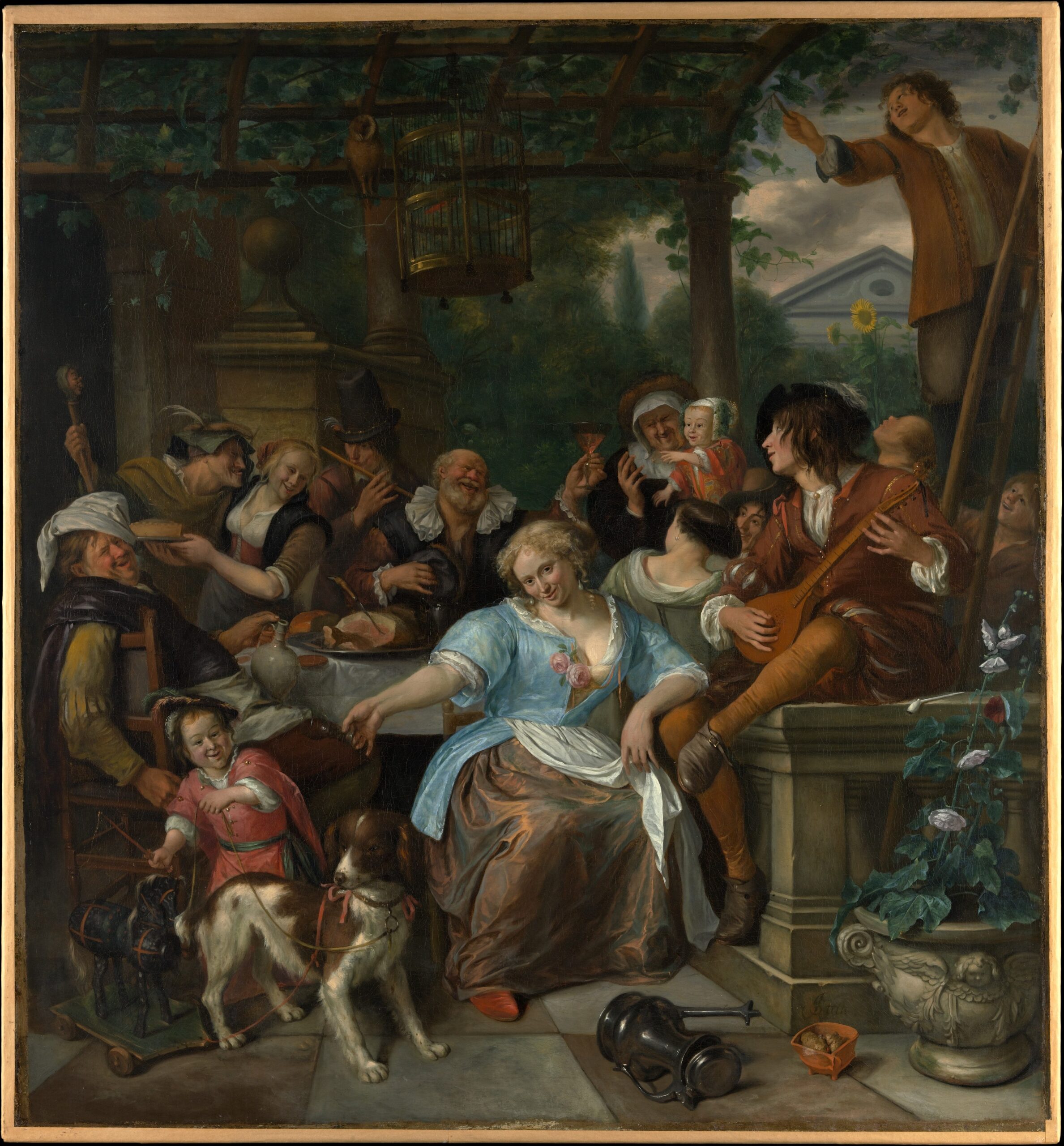
Look at Merry Company on a Terrace. Everyone seems to be enjoying themselves, but nothing is quite stable: a glass close to the edge, a servant juggling plates, a lute ready to be dropped. Steen hides little moral warnings in the comedy—cards, oysters, and alcohol as symbols of temptation—yet he never turns cruel. His brush warms the scene with golden light, as if to say: yes, this will end in a hangover, but for now the music is good.
If you’d like to decode the tiny clues in such paintings, stroll through How to Read a Painting (in 7 Steps), then dip into the Glossary of Art Techniques for terms like genre scene and glazing. For another artist who turned life’s mess into art, visit Painter’s Anecdote: Van Gogh, the Bandaged Ear, and the Yellow Studio, or wander into Goya’s darker tavern of the mind in Francisco de Goya’s Black Paintings: When the Walls Start Listening.
Jan Steen reminds us that history is not just kings and councils; it’s also the clatter of plates, the slosh of beer, and the painter in the corner, smiling as he turns disorder into art.